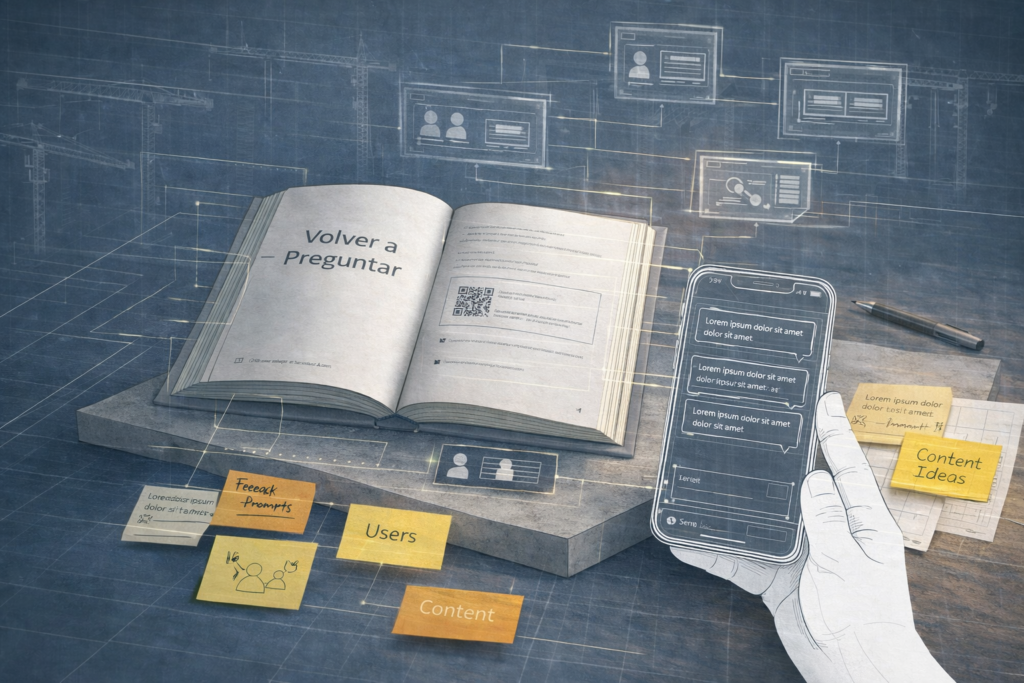
An unusual process in the publishing world: research, prototypes, and iteration. This is how a project was developed that ended up combining a book with a guided digital experience for learning artificial intelligence. How do we create Ask a question again.
Most books are created in a pretty predictable way. First, a manuscript appears. Then it enters an editorial process: proofreading, editing, design, printing, and finally publication. It’s a fairly linear flow.
Ask a question again He didn't follow that path.
In fact, for a good part of the process it wasn't even clear that the final result was going to be a book. But one thing was clear to me: I wanted to reach as many people as possible.
Think of the project as a product
Instead of starting with a finished manuscript, the project began more like tech products usually do: with an open problem and many hypotheses to validate.
The question wasn't “what book to write,” but something more like “How do you design a good first experience with AI for someone who has never used these tools?”.
For quite some time, that question was the only compass.
The project began to be developed as a system with different parts that could be tested, adjusted, and re-tested.
Exploration as a starting point
The first step was to better understand the problem.
In the world of product, this would be the Exploration. Conversations with users, exploration of frictions, and observation of how people interact with technology.
During the process, interviews, conversations, and surveys were conducted with people from different countries. The goal was not to evaluate how much they knew about artificial intelligence, but to observe something more concrete: where did friction appear in the first interaction.
It wasn't easy to get the user profile we needed: many people felt insecure about the topic, didn't have active social media, or were directly intimidated when they heard the phrase “artificial intelligence.”.
And there was something else we hadn't anticipated: it wasn't enough to find people who didn't use these tools. We also needed curious people, with a genuine desire to learn. The positive aspect was that, once we found them, the conversations flowed naturally, and we were able to gather a lot of information.
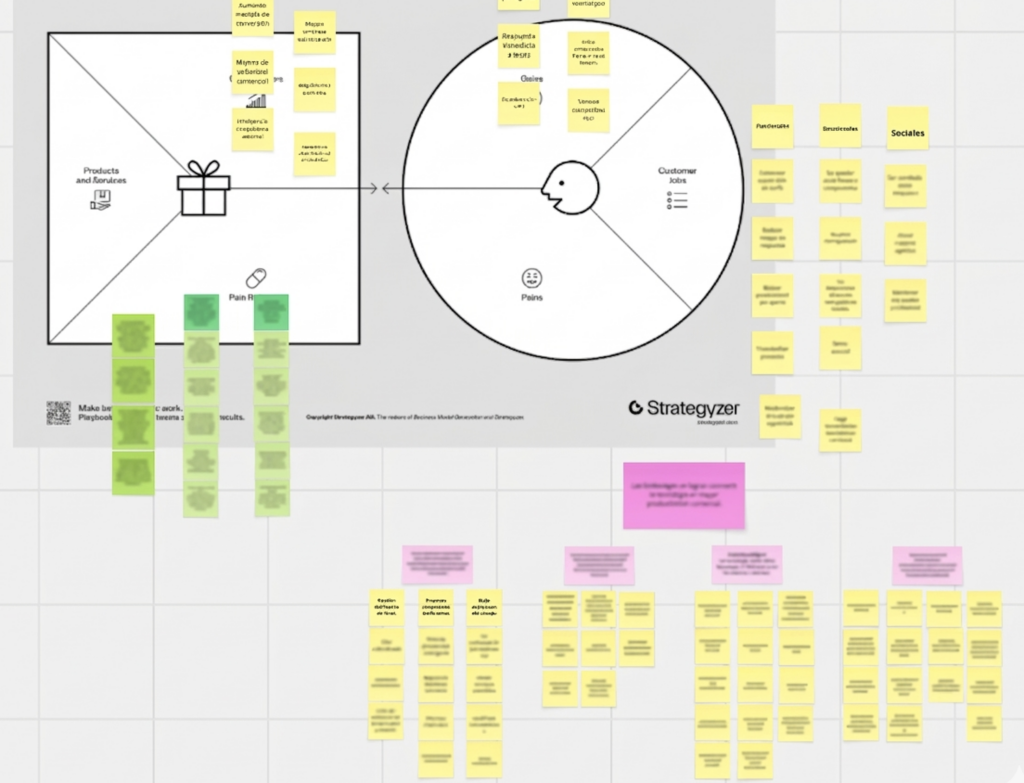
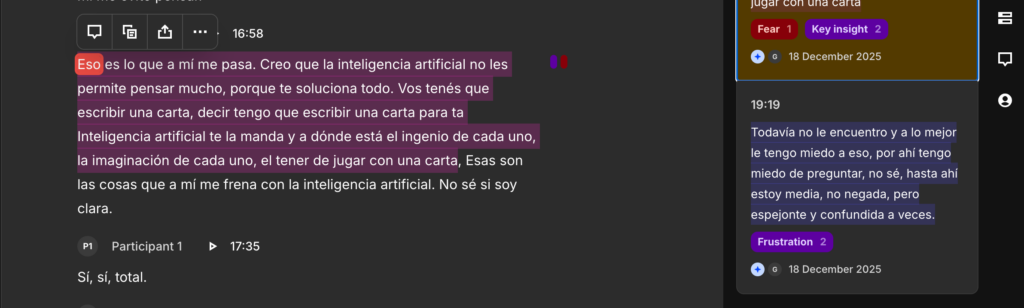
The patterns started appearing quite quickly. One of the most interesting discoveries was that the biggest fear wasn't technical. Most people weren't afraid of “not understanding” artificial intelligence. The fear appeared elsewhere.
In many conversations, deeper concerns emerged: lose autonomy, become too dependent on technology, or feel like the machine was starting to think for them.
That caught our attention a lot, because it means people don't perceive artificial intelligence as just another technology. They perceive her as a social actorSomething that can help, observe, invade, or even replace.
Another interesting idea also emerged: people weren't looking to master artificial intelligence. They didn't want to become experts. What they wanted was something much simpler: for the technology to serve them in solving something specific.
That discovery changed the project's direction. It helped us understand that the problem wasn't teaching technology, but design a first contact that doesn't generate anxiety.
Prototypes before manuscript
In the traditional publishing world, the book usually appears quite early in the process. Here, the opposite happened. For a long time, what existed wasn't a book, but rather interaction prototypes.
We tested different forms of conversation with artificial intelligence, different types of examples, and different ways to guide a person in their first contact with these tools.
Some things worked well. Others didn't.
For example, in the early experiments, the explanations were still too long or too technical. What seemed clear to someone from the digital world again gave many users the same feeling of distance.
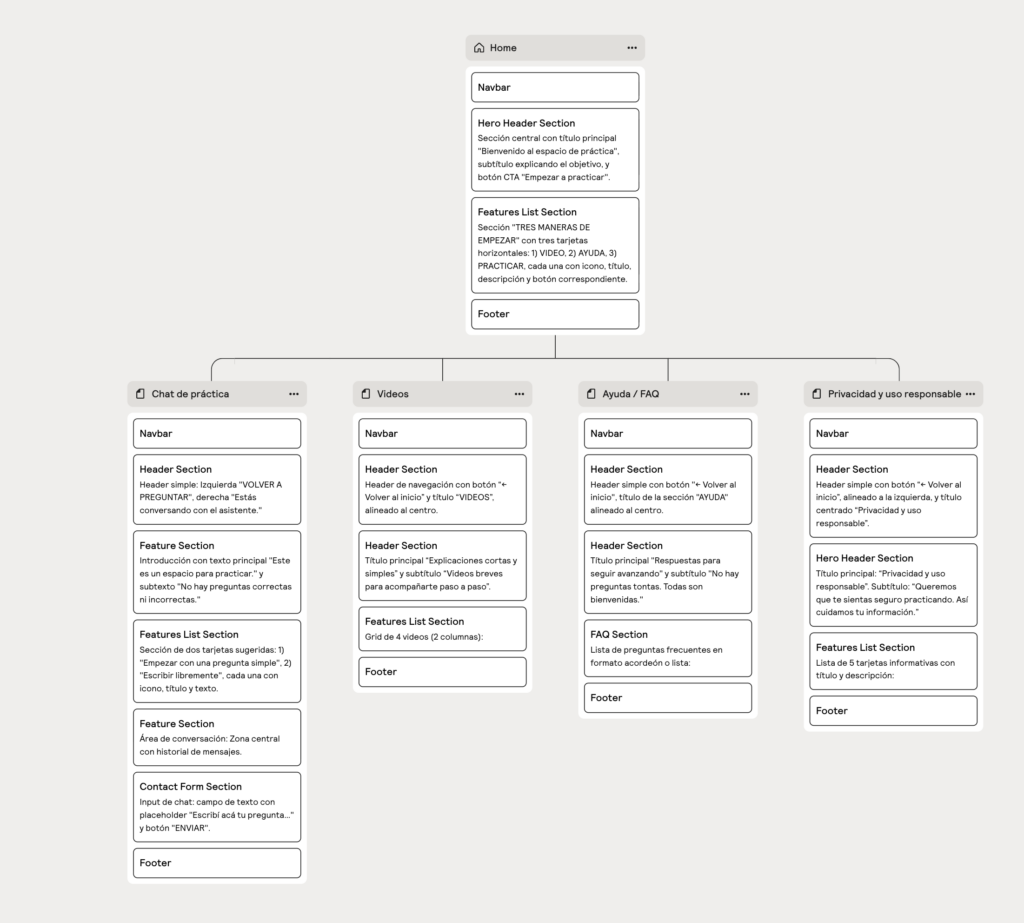
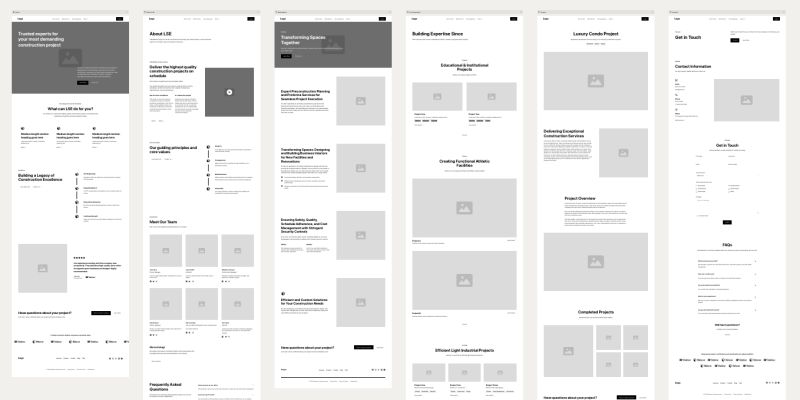
There another important lesson appeared: the problem wasn't just what was explained, but How was the space for testing created?.
That process led to the construction of what would later become the guided digital experience of the project.
Iterate over the content
As the project progressed, different materials started to appear. Some explanations worked better than others. Some examples generated more clarity. Some questions opened up more interesting conversations.
Instead of defining all the content from the beginning, those materials were gradually iterating. Small changes. Tests. Adjustments.
Something quite similar to what happens when a product team improves an interface or an onboarding flow.
Over time, that set of pieces began to organize itself naturally. And that's where something that looked like a book began to appear.
Design the first contact
An important difference appeared during testing.
Tools like ChatGPT or Gemini are designed as Open interfaces. They work very well for those who are already familiar with conversational AI logic, onboarding screens, user registration, many options, many buttons, and functions.
But for someone just starting out, that freedom can be difficult. The answers are often long, there are many possible options, and the conversation depends entirely on what the user knows to ask.
That's why we decided to design a different experience.
The app that accompanies the book guides the first contact. It proposes examples, simplifies answers, maintains an approachable tone, and helps formulate better questions. Instead of a blank page, the user finds a clear path to start.
In that regard, the difference is simple.
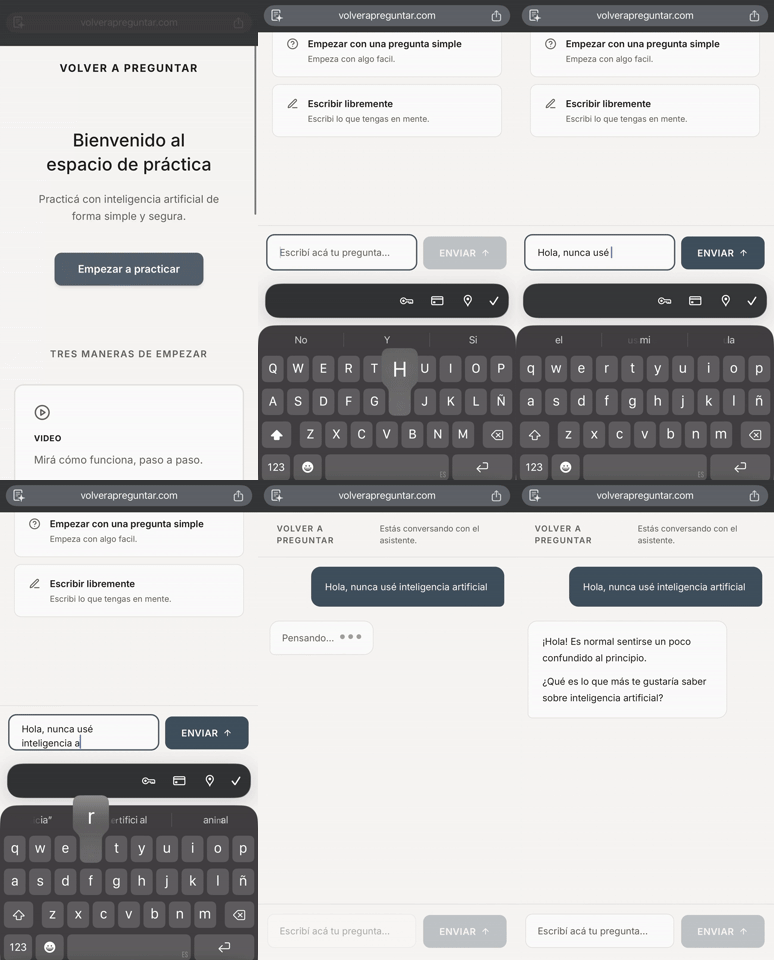
Our project designs the experience so that a person can use artificial intelligence for the first time without getting frustrated.
The book as a synthesis of the system
In traditional editorial processes, the book is usually the starting point. In this case, it was more of a result of everything that came before.
We took into account our audience's profile and thought about how we could reach more people. Offering workshops or talks wasn't enough. We understood that Editing a book was the most powerful way to impact many more people.
The book then appeared as the clearest way to organize all that learning and share it with more people. Something like documenting a system after it's been built.
A hybrid format
Ask a question again combine two components
- a book introduces concepts and builds context
- a guided digital experience Where can readers practice with artificial intelligence, created especially for that first contact?
The book organizes the ideas. The digital experience allows you to test them. And both work as parts of the same learning experience.
UA process closer to software development
I am not a writer. I am a tech entrepreneur. So, when we decided that the best format for the project was to launch a book, the only way I found to do it was developing it as if it were a product.
There was research before content. Prototypes before manuscript. Iterations before final version. And only at the very end did the editorial format appear.
Even the timelines followed that agile logic. While the traditional editorial process can take more than a year between evaluation, editing, and publication, in this case We managed to condense that cycle into three months.
In a way, this project also reflects something broader that's happening with technology. Artificial intelligence isn't just changing what we can build. It's also changing the speed at which we can process data, do research, analyze interviews, and so on.
Today it's possible to prototype, test, and adjust concepts much faster than before. And, when that process becomes more accessible, the possibility of create projects that generate real value.
Ask a question again It was born from that process. First the question appeared. Then came everything else.
If you want to know more about the book, you can find all the info here.