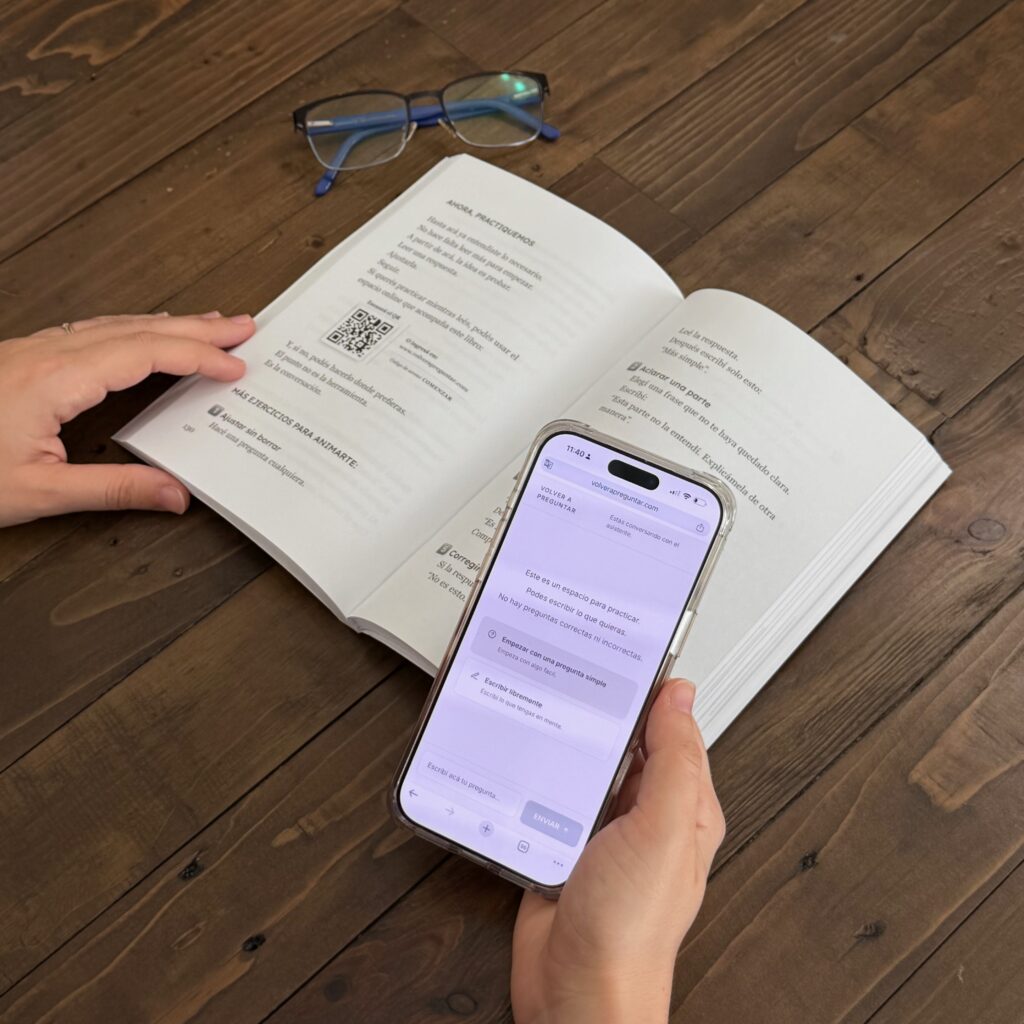
Ask a question again didn't start out as a book about artificial intelligence. It started with a question: why do so many people feel that artificial intelligence is too complex for them? That doubt ended up in a publishing project with a tech soul.
A year ago, at an adult education activity, a woman raised her hand and said something I would hear many times afterward:
“I'm not sure artificial intelligence is that good.” That woman's name was Barbara.
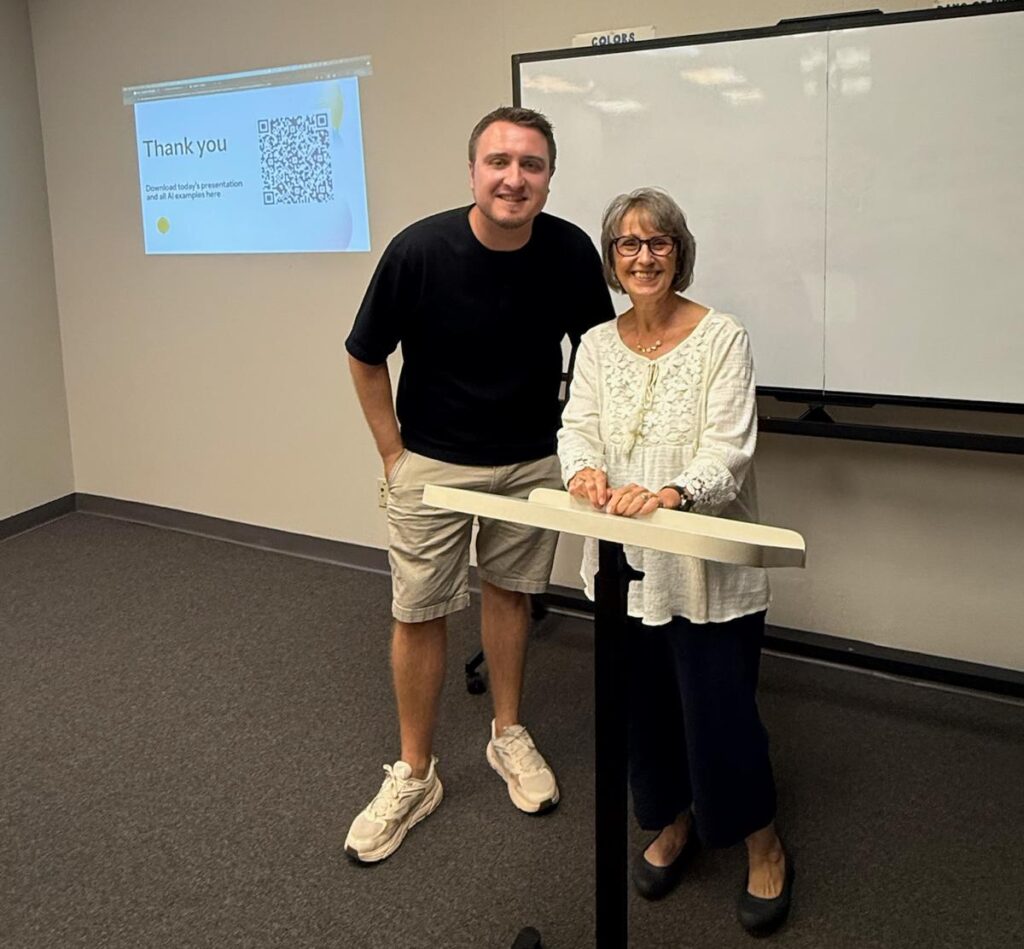
Barbara is retired and volunteers in a library. She spends part of her time teaching English to adults from different countries. People with very different stories, but with one thing in common: a great desire to learn.
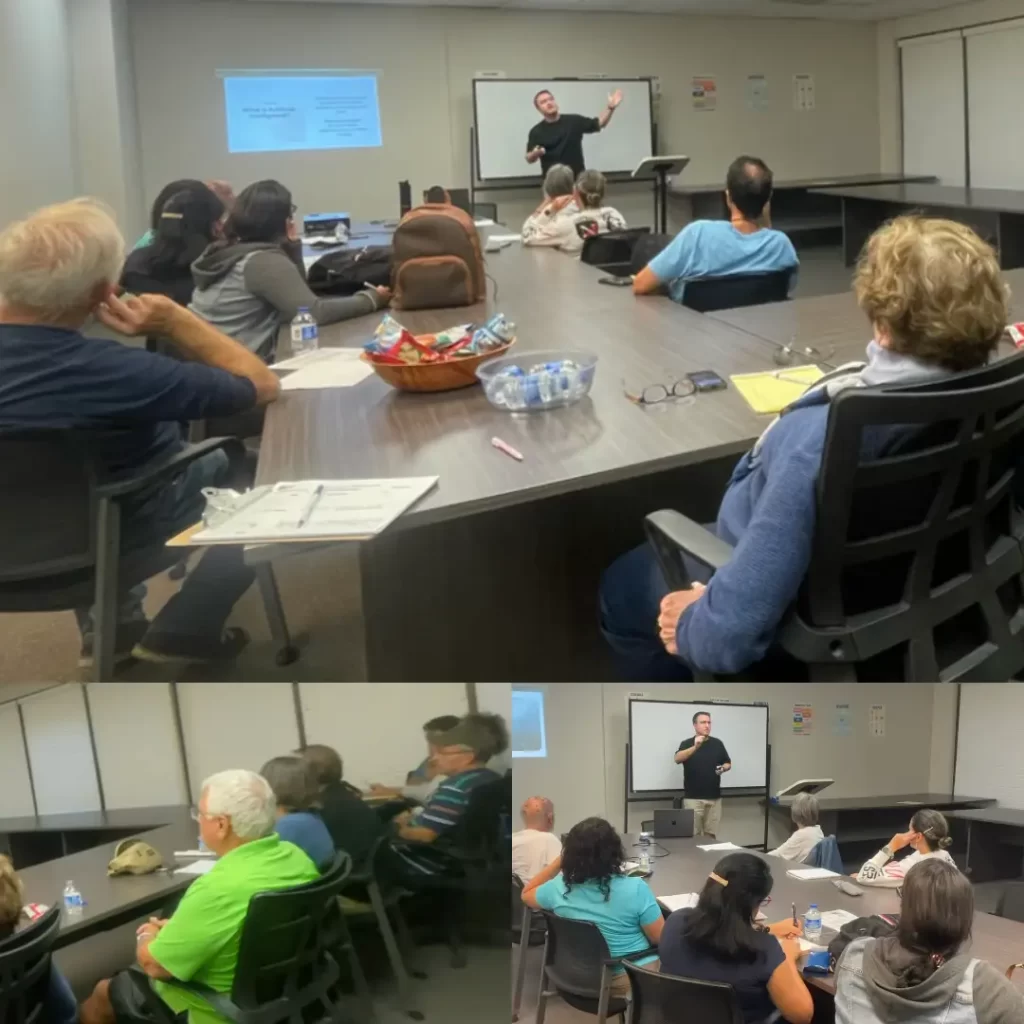
With her, we began to conduct workshops on technology with different people. Every time the topic of artificial intelligence came up, the reaction was the same:
“This is too complicated.”.
“I feel like I was late.”.
“I don't know where to start.”.
These were not isolated cases. During the following months I started to hear very similar phrases in different contexts: in other workshops, in informal talks, in conversations with people who, in other fields, have no problem learning new things. Professionals, entrepreneurs, curious, experienced people.
Perfectly capable people.
And yet, in the face of artificial intelligence, one feeling was quite clear: distance.
The funny thing is that the problem did not seem to be technical. No one was trying to understand how a language model works or what architecture neural networks use.
It was something more difficult to explain. A mixture of anxiety, frustration and the feeling that the technology conversation was already too far along to get into.
That feeling was not completely foreign to me. Even working in technology, the speed with which new tools appear can often create the same impression: that everything changes too fast.
That's when a question started to appear: why do so many people feel that artificial intelligence is too complex for them? Is the problem really that people don't understand the technology or that the technology is presented in a way that leaves many people out from the start?
That question ended up being the starting point for everything that followed.
The research behind the question
From that point on, I began to explore this question more closely.
During the following months, together with a small team that helped me in the process, we had in-depth conversations with people from different backgrounds and countries. The goal was not to measure how much they knew about artificial intelligence. I was interested in understanding something more basic: how people feel about it.
The responses began to show a fairly consistent pattern.
Many people are curious about artificial intelligence. Many want to learn. But the first contact with these tools is usually marked by three clear frictions:
-
- Unnecessarily complex technical language
-
- Interfaces designed for advanced users
-
- The constant feeling that everything is happening too fast
In other words, the problem did not seem to be in the ability to learn. It seemed to be at the point of entry.
A simple hypothesis
As a result, a fairly straightforward hypothesis emerged:
Digital exclusion in the face of artificial intelligence is not cognitive. It is a design, language and user experience gap.
It's not about people not being able to learn. It has more to do with the way we design and explain technology.
When the first contact with a tool generates anxiety, confusion or a feeling of being late, many people simply decide to stay away.
Design a new entry point
If the problem was at the point of entry, then the natural question was another: how do you design a more human first contact with artificial intelligence?
That was the kickoff of the project.
We started experimenting with different ways to explain it: everyday examples, simple exercises, real situations where artificial intelligence could be useful.
At the same time, another important idea appeared: if the objective was to reduce initial anxiety, it was not enough to explain the technology. A place to try it out was also needed.
Thus, the idea of combining two things began to take shape: a book that would help to understand artificial intelligence calmly and a digital environment dwhere people could practice with these tools in a guided manner.
Thus was born Ask a question again.
What is Ask a question again
Ask a question again is a project designed to provide a simpler entry point to artificial intelligence.
The project combines two elements.
On the one hand, a book about artificial intelligence which introduces the basic concepts with clear language, everyday examples and simple situations that help to understand how to interact with these tools.
On the other, a guided digital experience where readers can practice with artificial intelligence step by step.
Throughout the book, readers are invited to continue the experience in an environment specially designed to accompany people who are taking their first steps with this technology. There they can converse with artificial intelligence, try out different ways of asking questions and experiment.
The goal is not to teach advanced technology or to train experts. It is something simpler and, at the same time, more important: to offer a clear and smooth first experience with artificial intelligence, where making mistakes, trying and trying again is a natural part of the learning process.
Because, many times, the first step in learning a new technology is not understanding how it works.
It is to be encouraged to ask the first question. And, if necessary, ask again.
If you want to know more about the book, you can find all the info here.